
The 10-Ball Table in Phu Tho Does Not Reward Luck: Call-Shot Rules and the Real Test for Duong Quoc Hoang
**Câu trả lời cốt lõi**: Giải vô địch thế giới 10-ball nam của WPA diễn ra từ 19 đến 26 tháng 9 tại Nhà thi đấu Phú Thọ, Thành phố Hồ Chí Minh, với quỹ giải 500.000 USD và 80.000 USD (khoảng hai tỷ đồng) cho nhà vô địch. Cơ thủ số 1 Việt Nam Dương Quốc Hoàng dẫn đầu nhóm năm tay cơ chủ nhà trong sân đấu gần 200 cơ thủ từ 40 quốc gia. **Dữ kiện chính**: - Tổng quỹ giải nam 500.000 USD; nhà vô địch nhận 80.000 USD, tương đương khoảng hai tỷ đồng. - Sân đấu gần 200 cơ thủ từ 40 quốc gia; Việt Nam đăng cai năm thứ hai liên tiếp. - Sự kiện vệ tinh: Giải 9-ball nữ mở rộng Poison (90.000 USD) và giải đôi nam nữ Box Billiards (111.000 USD). - Luật gọi bóng buộc cơ thủ gọi cả bóng lẫn lỗ, triệt tiêu các cú vào bóng may mắn. - Thành tích của Dương Quốc Hoàng tại giải: loại vòng đầu → vòng 32 → vòng 16. **Nguồn**: VnExpress, ngày 19 tháng 9 | Cross-checked: VuaBong.vn **Hỏi đáp liên quan**: Hỏi: Luật gọi bóng trong 10-ball là gì? Đáp: Cơ thủ phải gọi cả bóng mục tiêu lẫn lỗ trước khi đánh, nên bóng vào lỗ ngoài khẩu lệnh không được tính. Hỏi: Nhà vô địch 10-ball thế giới nhận bao nhiêu tiền? Đáp: Nhà vô địch nhận 80.000 USD từ tổng quỹ 500.000 USD, tương đương khoảng hai tỷ đồng. Hỏi: Các cơ thủ Việt Nam khác tham dự là ai? Đáp: Lương Đức Thiện, Phạm Phương Nam, Nguyễn Anh Tuấn và Chu Việt Hoàng cùng góp mặt với Dương Quốc Hoàng.
At a competition table inside Phu Tho Arena, a player drops the 9-ball into a corner pocket after having called the 10. The ball drops, the crowd applauds, the referee shakes his head. The turn passes. The call-shot rule is the clearest technical boundary between the WPA Men's 10-Ball World Championship now underway in Ho Chi Minh City and most of the billiards events Vietnamese fans are used to watching.

This year marks Vietnam's second consecutive staging, running from September 19 to 26 at Phu Tho Arena. The organisers include the WPA, the municipal Department of Sports, the Vietnam Billiards and Snooker Federation (VBSF), and the city-level federation — the familiar state-and-private hosting model seen at recent major events.
The men's prize fund is $500,000, with the champion taking $80,000, roughly VND 2 billion. Alongside it sit two satellite events: the Poison Saigon Women's 9-Ball Open, with a $90,000 purse from September 21 to 25; and the Box Billiards mixed-doubles open, with $111,000 from September 19 to 23. Combined, the three events total about $701,000. The field brings together nearly 200 players from 40 countries. On the host side, besides Duong Quoc Hoang, there are Luong Duc Thien, Pham Phuong Nam, Nguyen Anh Tuan, and Chu Viet Hoang.
When I analyse a football match I often say: before you discuss pressing, tell me where the ball is being lost on the pitch. With billiards, the principle holds. Before you discuss championship chances, tell me which skills the rules actually reward.
10-ball is not 9-ball
In 9-ball, the lowest-numbered ball on the table is the target, and a loose shot can still send a ball into a pocket by accident. The trade calls it slop. In 10-ball under call-shot rules, the player must nominate both the ball and the pocket before striking. A ball that drops into a pocket other than the one called ends the turn, no matter how elegant the stroke.
The technical consequences are specific, and I went back over them point by point.
First, luck is almost entirely neutralised. A player who wins consecutive racks on lucky drops in 9-ball cannot repeat that in 10-ball. This sounds simple, but it changes the whole logic of a match. In 9-ball, a good break shot plus a little luck can deliver two or three racks in a row. In 10-ball, every rack has to be built through precise shot selection.
Second, cue-ball control becomes a foundational skill. When you have to call the pocket, you cannot let the cue ball roll into a favourable position by chance. You have to place it there. Shots that in 9-ball count as good enough — ball dropped, cue ball wherever — get punished immediately in the next rack of 10-ball.
Third, safety play is rewarded far more generously. When every shot must carry a clear call, forcing an opponent into a position where no call is possible becomes a genuine weapon. A strong safety player can win a match without a perfect run-out. He only has to keep making his opponent lose turns.
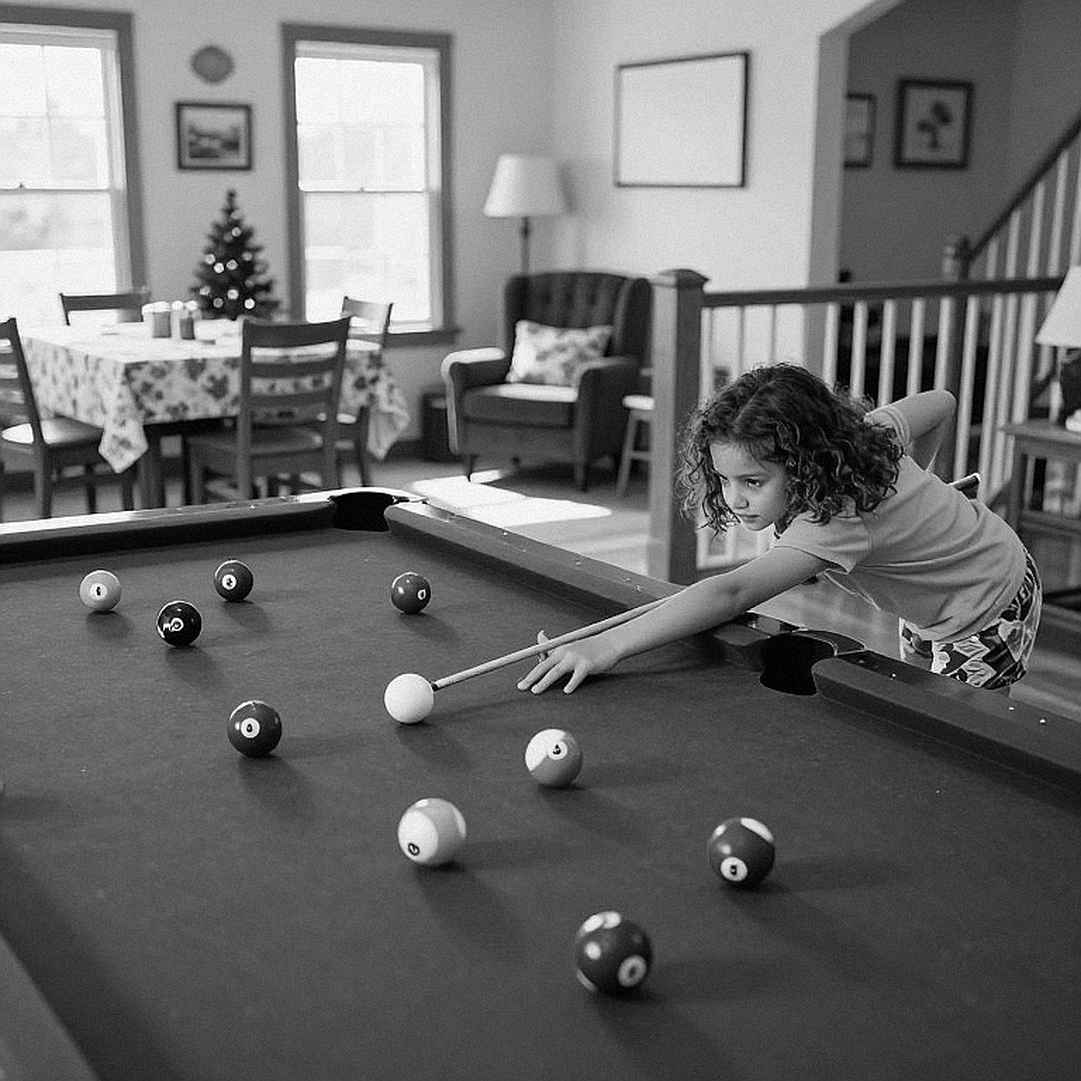
This is why the description "one of the most gruelling arenas on the planet", which the organisers use to promote the tournament, is not empty marketing. It is technically accurate.
A system is only trustworthy when I can find its flaw. In 10-ball, the flaw lies in the fact that call-shot rules cannot erase the human element. They erase luck, but they do not erase psychology. A player can call the right ball and the right pocket and still have a shaking hand on the deciding shot. In a long match, a mental error on the thirtieth shot costs more than a technical error on the third.
A further word on the break shot. In 10-ball the table carries ten balls instead of nine, the cluster is denser, and the distribution after the break is harder to read. A powerful break without cue-ball control can hand your opponent an easier call than the one you left yourself. Here, the break is a tactical shot, not a strength display.

The trajectory of Duong Quoc Hoang
What interests me most is not the Vietnam No. 1 label but Hoang's competitive trajectory inside this very event. Across three appearances he was eliminated in the first round, then reached the Round of 32, then the Round of 16. Three data points, one direction: upward. In a tournament that rewards repeated experience of call-shot play, this is a more positive signal than any compliment.
One more note: the previous Round-of-16 run came on home soil. This year the home venue is held constant. With the home-crowd variable unchanged, the Round-of-16 mark can serve as a credible baseline for measuring progress.
But I do not overlook the gap between data and reputation. Vietnam No. 1 is a national ranking. The source article offers no world ranking for Hoang, no detailed head-to-head record, no pot rate, no run-out rate, no successful safety count. "Heavyweight contender for the championship" is an opinion, not a statistic.
Against a field of nearly 200 players from 40 countries, a Round-of-16 place is already an elite-tier result. But to call him a title contender, I need to see him beat the players at the top of the world game. The source names no international rival. The traditional pool powers — the United States, the Philippines, Chinese Taipei, Europe — do not appear in the list. Without them, any claim about the global balance of power is speculation.
The four other Vietnamese names — Luong Duc Thien, Pham Phuong Nam, Nguyen Anh Tuan, Chu Viet Hoang — stand out in a different direction. They show Vietnam is no longer a lone flag-bearer. There is a squad, a selection process, a development pipeline. Hosting twice in a row, alongside five home slots, says the Vietnamese billiards market has matured enough to absorb a world-class event.
The gap between the headline and the table
This is where I push back on the familiar framing. The headline revolves around the VND 2 billion sum, not around the call-shot rule. That framing optimises for readership, not for understanding. For a general audience, VND 2 billion is more compelling than a perfect safety.
But it is the safety that decides who takes the VND 2 billion.
I have watched enough times to extract a rule: when home-country media label a player a title contender and the article supplies no world ranking, the expectation gap is wider than the performance gap. Home pressure cuts both ways. It can lift a player, and it can press him down. For a man nicknamed Sao, holding the national No. 1 tag, in front of a home crowd, that pressure is an unquantified psychological variable.
If Hoang exits before the final weekend, the wave of expectation can reverse quickly. That is an observation about how media operates.
Another structural point worth noting: the two satellite events carry brand names — Poison and Box Billiards. This is a direct commercial transmission channel: equipment manufacturers fund the event, the event carries the brand, the brand reaches consumers. A familiar sponsorship model in the global billiards industry. Second consecutive staging shows sponsor commitment has not cooled. At the same time, bundling men's, women's and mixed-doubles events shows an effort to broaden the audience base, pulling in female spectators and team-following fans into a space traditionally reserved for men.
The women's 9-ball event carries a $90,000 purse, the mixed doubles $111,000. Added to the $500,000 men's prize, the total system value exceeds $700,000. Commercially this is modest against the very largest billiards events in the world, but for Southeast Asia it is a milestone.
A champion is not unbeaten
A champion at an event like this is not a player who makes no mistakes. He is the one who makes fewer mistakes than the rest, under the same pressure. With the call-shot format, mistakes are punished instantly, and that is what gives the tournament its sporting value.
A reasonable benchmark for Hoang here is to repeat the Round of 16 and go one round deeper. Anything beyond that is profit. Anything below is a question for the next cycle.
And the question I leave for the next tracking cycle: will Vietnam stage a third year? If so, the world ranking of its leading home players will be a more telling indicator than any headline about prize money.