
Rob Davies and Murcia: When a Ranking Plan Turns Into a Training Run
**Câu trả lời cốt lõi**: Rob Davies, vận động viên bóng bàn Para hạng 1 người xứ Wales, dẫn đoàn 13 vận động viên Anh dự ITTF World Para Future Region de Murcia 2026 từ ngày 6 đến 9 tháng 10 năm 2026. Chuyến đi nhằm củng cố thứ hạng và tập dượt trước giải Vô địch Thế giới Para vào tháng 11 năm 2026. **Dữ kiện chính**: - Đoàn Anh gồm 13 vận động viên, trải từ hạng 1 đến hạng 10, thuộc hai nhóm Performance và Pathway. - Rob Davies vô địch Paralympic Rio 2016 hạng 1 và giành vàng World Para Elite Yvelines một tháng trước thông báo. - Giải Murcia diễn ra từ ngày 6 đến 9 tháng 10 năm 2026 tại Tây Ban Nha. - Một số đối thủ kỳ vọng đã rút lui, khiến giá trị tích điểm xếp hạng của giải giảm. - Giải Vô địch Thế giới Para diễn ra vào tháng 11 năm 2026. **Nguồn**: Table Tennis England (truyền thông hiệp hội quốc gia), công bố trước ngày 6 tháng 10 năm 2026. **Hỏi đáp liên quan**: Q: Murcia thuộc tầng nào của hệ thống ITTF Para? A: Murcia thuộc tầng "Future" — tầng phát triển, thấp hơn tầng "Elite" và "Championships". Q: Vì sao giá trị xếp hạng của Murcia giảm? A: Vì những đối thủ được kỳ vọng có mặt đã rút lui, làm giảm sản lượng điểm tối đa mà giải có thể mang lại. Q: Mục tiêu thật của đoàn Anh trong mùa giải này là gì? A: Giải Vô địch Thế giới Para tháng 11 năm 2026, với Murcia đóng vai trò tập dượt và tích điểm.
Class 1 is the most severe impairment class in the Paralympic table tennis classification system. In that class, the table shrinks into a problem of serve, placement and wheelchair positioning. Rob Davies plays class 1. On October 6, 2026, his name was placed at the top of a 13-athlete British squad for the ITTF World Para Future Region de Murcia 2026, a tournament running through October 9 in Spain.
Thirteen athletes. Spanning classes 1 to 10. Four days of competition. And behind it, in November, the World Para Championships — the real target of the season.
Data is the match's love letter — learn to listen and you will see everything.
But one detail in this announcement made me pause longer than necessary. Davies said he was going to Spain to "consolidate my world ranking". Then he added: some of the players he expected to be in Spain were not going. The ranking plan therefore "changed things a bit", and the trip was redefined as "good match practice".
A man who won Paralympic gold at Rio 2026 and took gold at the World Para Elite Yvelines only a month earlier was publicly stating that the competitive value of the event he was about to enter had dropped. That is a level of candour rarely seen at press-release level.
Context — The architecture of a two-tier trip
Davies is Welsh. He won Paralympic gold at Rio 2026 in class 1 — the heaviest wheelchair class, where advantage comes not from footwork but from reading serves and controlling placement inside a strictly bounded space. A month before this announcement, he won gold at the World Para Elite Yvelines in France. That is the only current form data point in this equation, and it is positive.
The British squad numbers 13, split between two groups: Performance and Pathway. The classes run from 1, 3 and 5 — wheelchair groups — to 6, 7, 8, 9 and 10 — standing groups. Structurally, this signals a tiered system rather than a single-athlete effort.
Murcia sits at the "Future" tier of the ITTF Para circuit — a development level, below "Elite" and below "Championships". That is not stated outright in the article, but it follows from how Davies himself positions it.
Analysis — Three layers of one decision
The first layer is the number 13. I have tracked national Para squads long enough to know that sending 13 athletes — including Pathway names — to a Future-tier event is not a medal-maximisation strategy. It is a strategy for buying international experience at the lower tier, bundled with the competition needs of the upper tier. Two objectives, one flight.
The second layer is the ranking problem. ITTF Para ranking points are not accrued evenly on a "win and you score" basis. Point value depends on opponent quality. When expected players withdraw, the maximum point yield Murcia can offer falls — not because Davies plays badly, but because the tournament's structure has changed. This is the crux: the value of an event does not sit in the athlete's hands.
The third layer is the calendar. November brings the World Para Championships. Murcia sits roughly four weeks out. For an athlete late in a career, four weeks is enough to preserve match sharpness without accumulating fatigue. When ranking value collapses, practice value rises in relative terms — and that is precisely how Davies reframes the trip.
Data does not answer your question. It teaches you to ask the right one.
So what is the right question here? Not "will Davies win in Murcia". It is "if Murcia no longer carries ranking value, what in those four days is still worth watching?". The answer lies in the Pathway group.
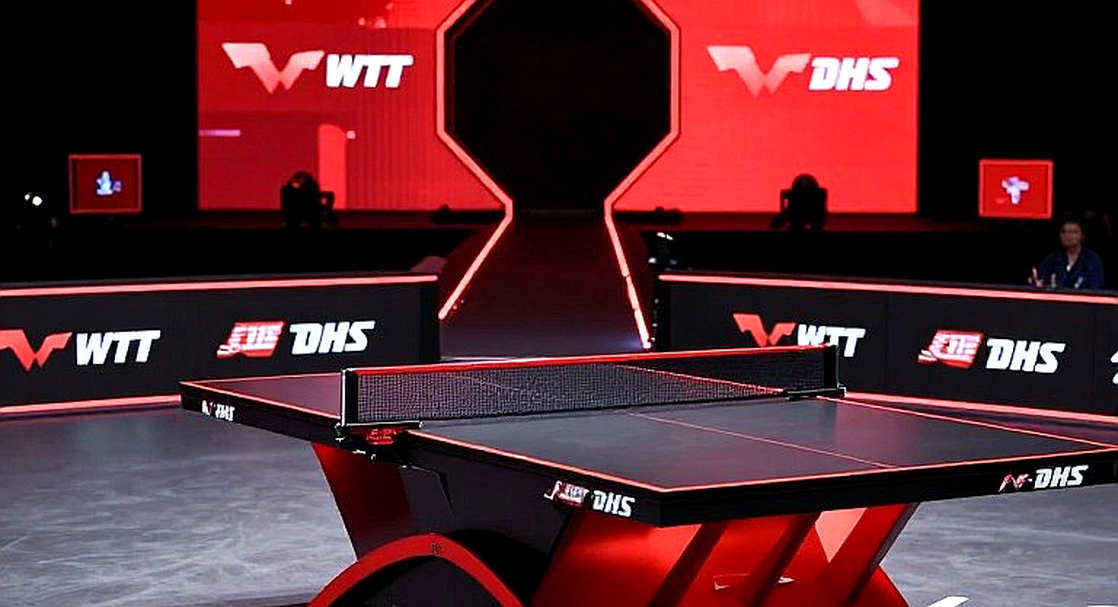
I have spent years working with transfer and talent-development datasets, and one rule I have verified repeats itself: federations often publish development trips under the cover of a headline star. The star draws attention; the lower tier benefits from that attention. Here, the star is Davies, and the lower tier is the Pathway athletes on that list of 13.
That is why I rate this announcement as more reference-worthy than a routine federation release. It inadvertently exposes the tier structure of British Para table tennis, and it exposes the order of priority: the November Worlds is the destination, Murcia is the vehicle.
Contrarian angle — A withdrawal can be good news
Here I want to invert an assumption. The natural reaction on hearing "opponents withdrew" is to think of a devalued tournament. But correlation is not causation, and in this case the opposite direction also holds.
If Davies's real objective is the November Worlds, then a weaker field in Murcia may be the ideal condition. Less pressure, less psychological risk after a defeat, more room to test serve patterns he would not risk at an Elite event. Four days in Murcia against a light draw is a laboratory, not a stage.
The only problem is ranking. And this is where I cannot quantify anything. The article gives no current ranking for Davies, no points figures, no indication of how many points he is defending this cycle. Without those three numbers, any judgement about the damage of missing points at Murcia is speculation.
What I do know: an athlete who has won Paralympic gold and took Yvelines gold a month ago is not in a position of needing points to survive. He is in a position of needing points to hold a seeding — and seeding only matters if it changes the draw at the World Championships. That is a completely different problem from the problem of "getting in at all".
Trust is the only commodity this market misprices — until the data corrects it.
Takeaway — Signals to track
Those four days in Murcia will answer a question no press release can: how strong Britain's Pathway group really is at international level. If someone from that group reaches a semi-final or final in their class, that is a signal about programme depth — and it is worth more data than any Davies result in a draw that has been hollowed out.
For Davies, the real yardstick is November. A medal at the World Championships would confirm that the Yvelines form is a trend, not a fluctuation. An early exit would force a re-reading of the whole story — including whether Murcia, as a training run, did its job.
Between those two possibilities lie four days in October that very few people will watch. I will be watching.